Project Overview
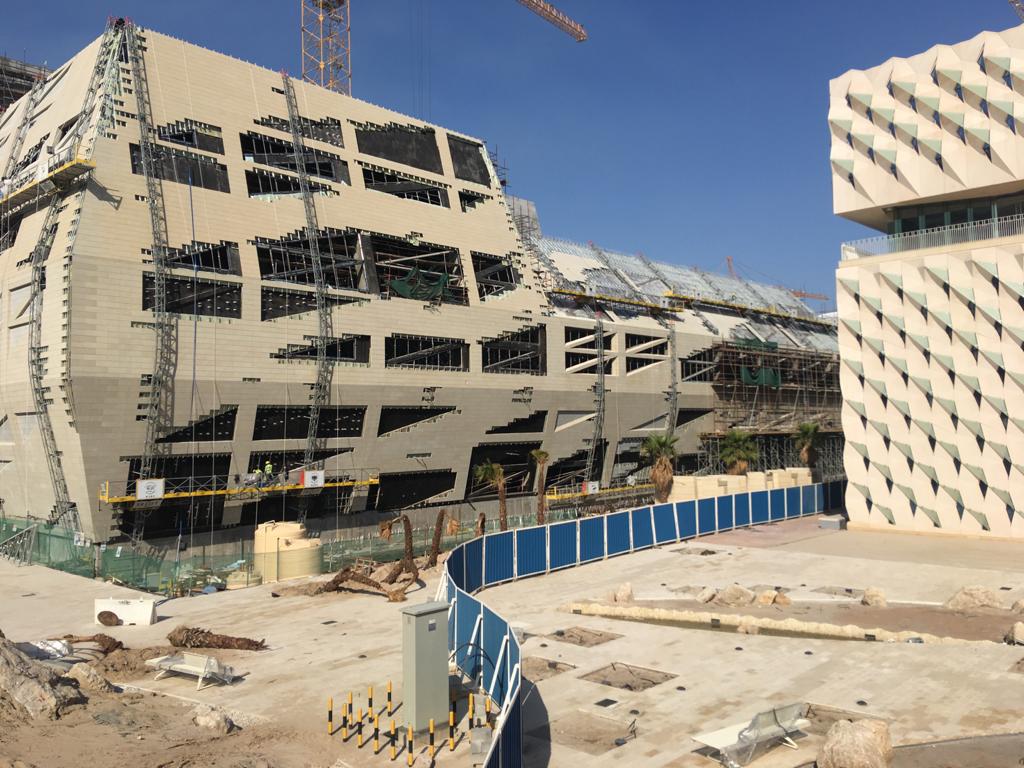
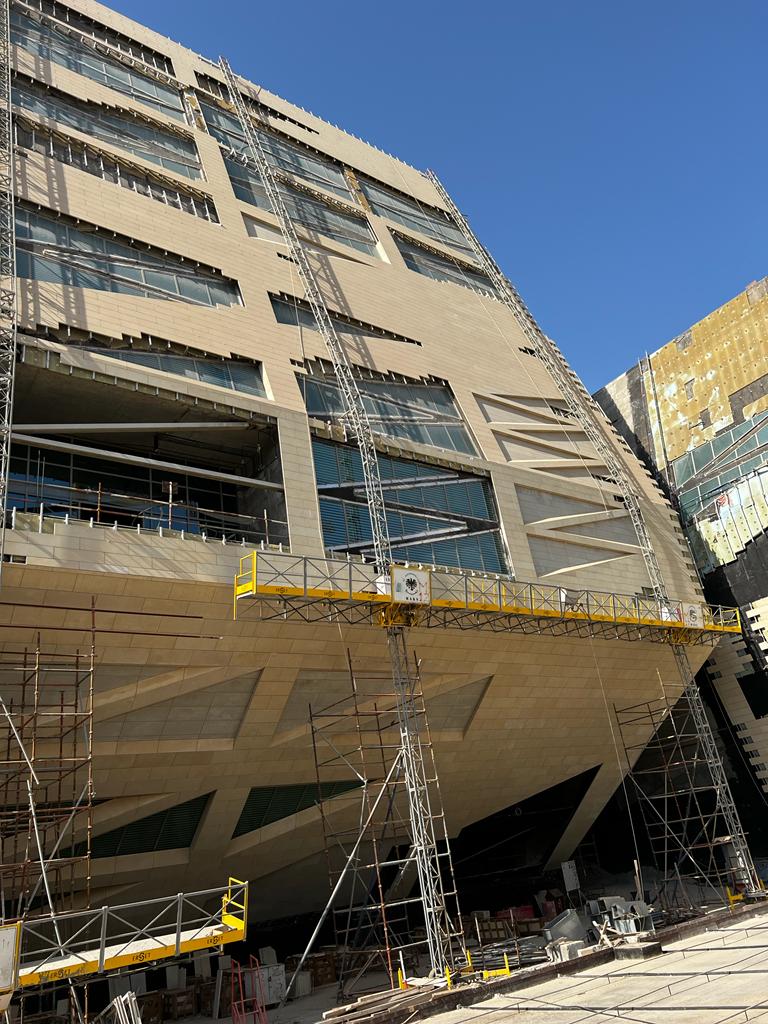
Execution of large-scale stone-cladded façades with complex geometry, involving fixation to
concrete, block work, and steel structures. The façade incorporates multiple cavity depths (200
mm, 320 mm, and 420 mm) and a wide range of architectural features, requiring advanced
detailing, engineered fixation solutions, and controlled site execution.
Façade Area: Building A = 20,900m², Building B = 27,500m², Building C =
8,500m², Building D = 9,650m², Total = 66,550 m²
Key Architectural Features
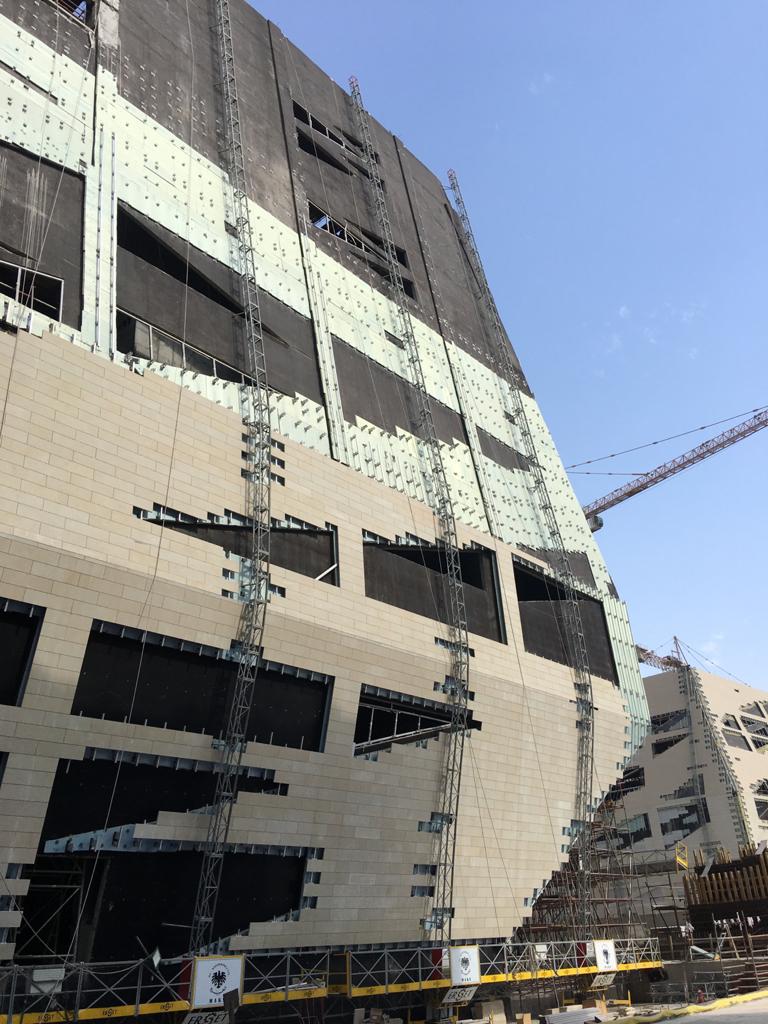
- Inclined walls at varying angles
- Multiple stone slab sizes per inclination
- Recessed areas, divots, balconies, soffits, and coping
- Stone slabs at soffits, inclined sills and returns of triangular windows
- Inclined edges and expansion joints
Stone Fixation
on Steel Tubes in Recessed Areas
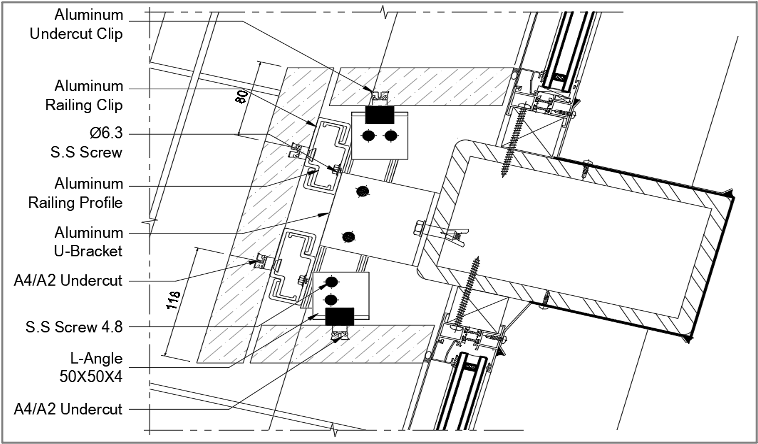
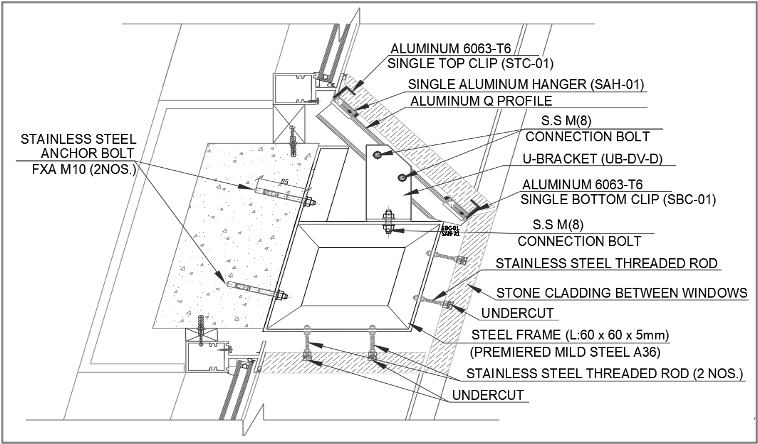
Stone Fixation
between Windows
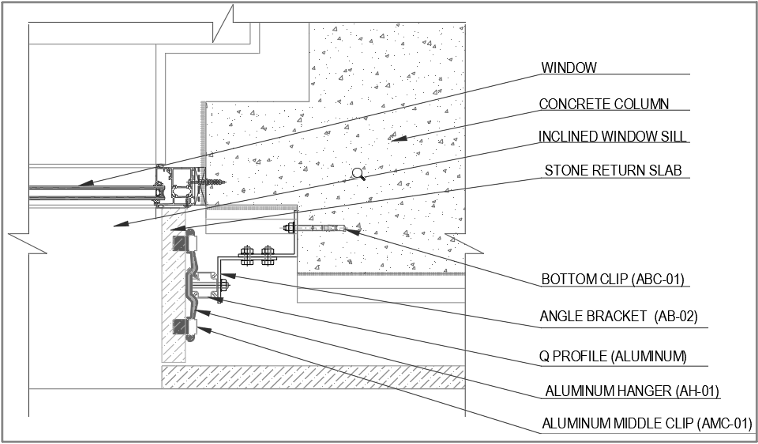
Stone Fixation
on Window Return Slab
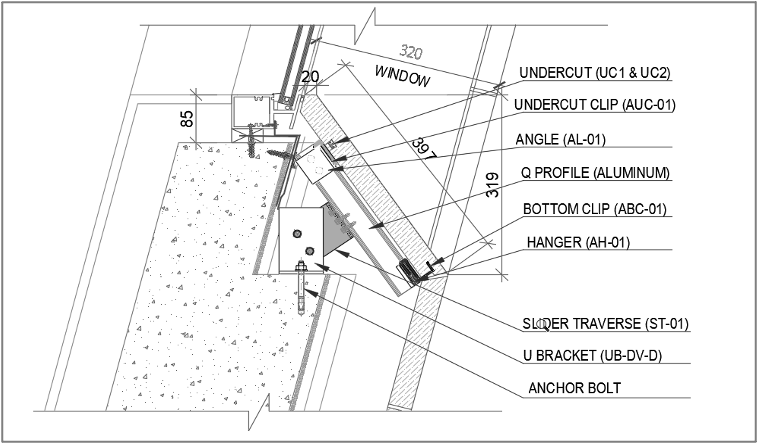
Stone Fixation
on Window Inclined Sill
Engineering & Execution Scope
- Quantity take-off verification and material reconciliation with suppliers
- Coordination of architectural, structural, stone cladding, and support system drawings
- Preparation and approval of shop drawings, typical details, and special fixation details
- Review of stone cladding drawings, cutting lists and fabrication data
- Identification of engineering constraints and development of technical solutions
- Supervision of stone installation and subcontractor coordination
- Progress monitoring, risk identification, and mitigation
- Quality control enforcement and workmanship assessment
Technical Design Considerations
- Integration of structural design calculations into stone support system drawings
- Thermal movement accommodation using fixed and sliding fixation principles
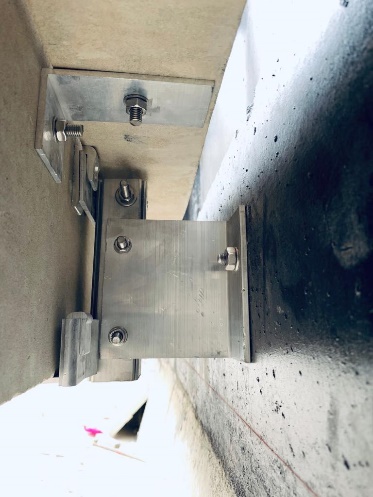
- Use of aluminum and stainless steel brackets with varied anchorage for concrete, block, and
steel substrates
- Visual alignment of varying slab sizes through controlled joint width adjustments at
different inclinations
- Provision of expansion joints in accordance with performance requirements
Engineering Challenges & Solutions
- Cavity Variations on Inclined Walls: Construction deviations resulted in
cavities exceeding the specified depths. Solution:
Slider traverses were introduced for 200 mm cavities, while 320 mm cavities were upgraded to
a 420 mm system using double profiles.
- Fixation of Small Triangular Stone Units: Limited backing area restricted
standard anchorage. Solution: Specific brackets
with undercut stone connections and 10 mm steel rod anchorage were developed and validated
through mock-ups.
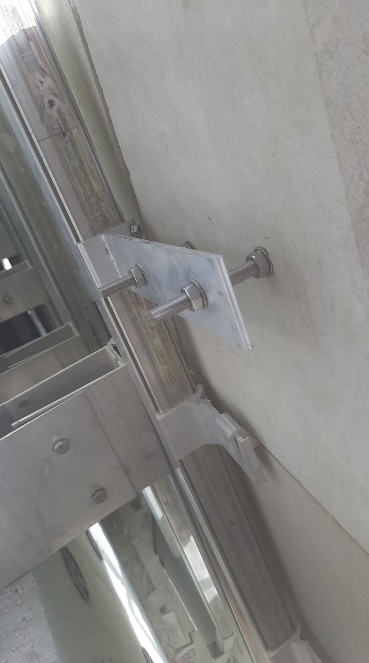
- Restricted Fixation Zones Between Closely Spaced Openings: Insufficient
space for standard brackets between adjacent windows. Solution: A custom-fabricated fixation frame was
designed and locally manufactured following successful mock-up testing.
- Material Control of Unique Stone Elements: Elevation-specific stones
required strict tracking. Solution: Elevation-wise
material control and movement tracking were implemented across site storage and installation
zones.
Project Outcome
The project demonstrates the ability to engineer, coordinate, and execute complex stone façades
through precise detailing, adaptable fixation systems, and disciplined construction control,
ensuring both structural performance and architectural intent.
Overview
Representative GRC cladding scope demonstrating panelized installation systems typically used
for mid-rise residential and commercial buildings.
Scope Highlights
- GRC panel installation with engineered brackets
- Sub-structure, anchors, and fixing systems
- Panel layout, sequencing, and QA/QC control
Technical Highlights
- Curved panel handling and bracket offsets
- Manufacturer-approved lifting procedures
- Joint sealing and waterproofing systems
Outcome
Demonstrates controlled GRC façade installation and technical coordination.
Overview
Demonstration of a modern façade combining ACP panels, stone bands, and decorative elements.
Scope Highlights
- ACP and stone façade systems
- Interface detailing and waterproofing
- Sub-structure and installation sequencing
Technical Highlights
- Thermal movement control between materials
- Fire-rated ACP and shadow-gap detailing
Outcome
Shows effective integration of multiple façade materials.